

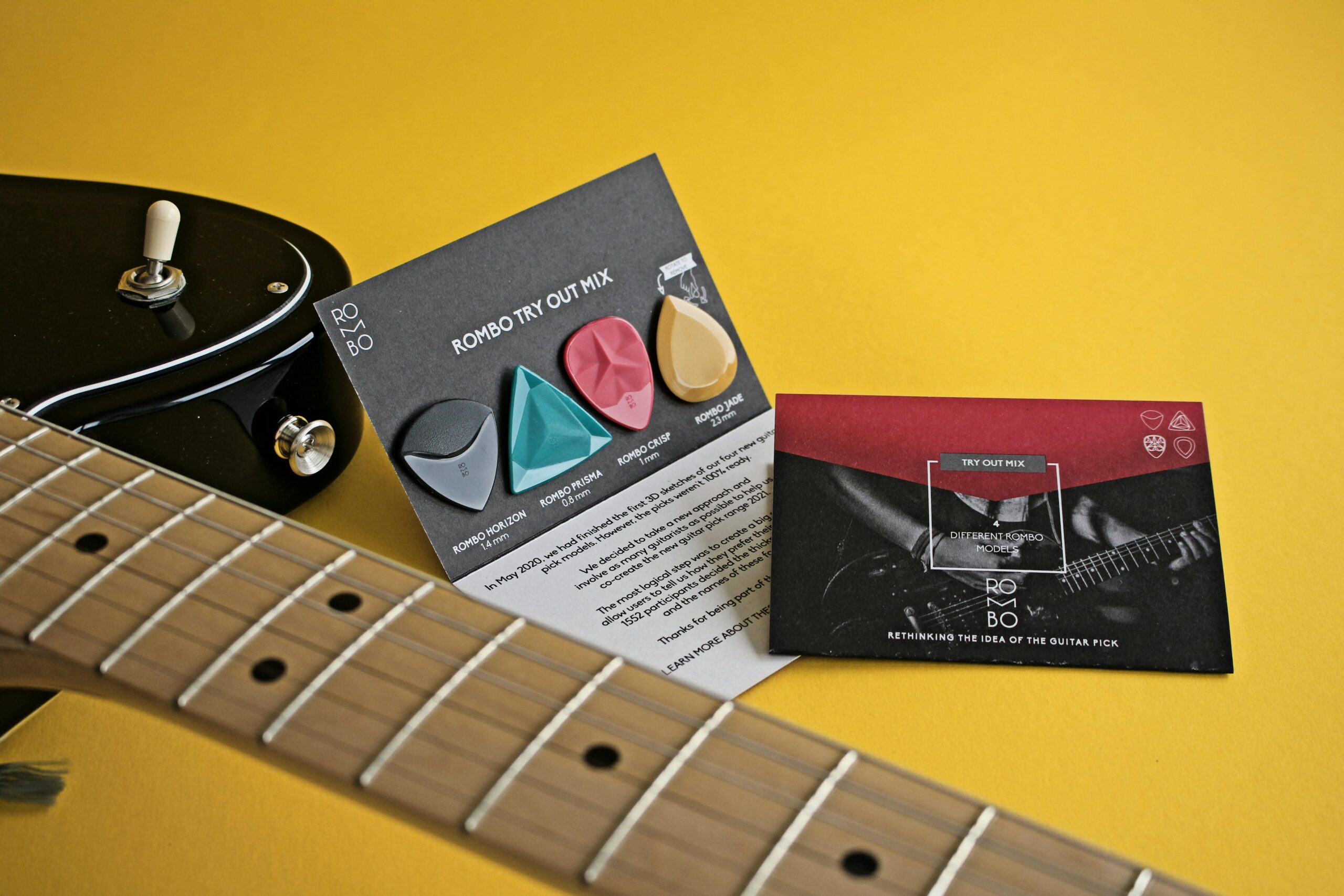
Choosing the Right Pick: The Hidden Key to Your Guitar Tone
When you’re starting out at StrumEasy, most of your focus is on where your fingers go on the fretboard. But here is a secret every pro knows: your pick is the first point of contact between you and your music. It is the “bridge” that transfers energy from your hand to the strings.
Using the wrong pick can make a high-end electric guitar sound dull, or make a fast solo feel like you’re playing through mud. Here is how to find the perfect pick for maximum output and better technique.
1. Thickness Matters (The Gauge)
Pick thickness is measured in millimeters (mm). Even a 0.2mm difference can completely change how you play.
Thin Picks (0.40mm – 0.60mm): * Best For: Strumming acoustic guitars.
The Sound: They have a “percussive” clicky sound that blends beautifully with chords. They are flexible, which means they won’t snag on the strings while you’re rhythmically strumming.
Medium Picks (0.70mm – 0.90mm): * Best For: The “All-Rounder.”
The Sound: These provide enough stiffness for lead lines but still have enough “give” for strumming. If you only want to carry one pick, this is the gauge.
Heavy/Extra Heavy Picks (1.0mm – 2.0mm+): * Best For: Electric guitar solos, Jazz, and Metal.
The Sound: Maximum control. A thick pick doesn’t bend, meaning the string moves the second you hit it. This provides the most “output” and volume from your pickups.
2. Shape and Tip Sharpness
The shape of the pick determines your accuracy.
Standard (351 Shape): The classic heart-shaped pick. Great for beginners because it provides a large surface area to grip.
Jazz III Style: These are smaller and have a very sharp tip.
Why pros love them: Because the tip is sharp, there is less friction against the string. This allows for “Economy Picking” and “Alternate Picking” at high speeds. At StrumEasy, we recommend these once you start learning fast scales.
3. Material and Texture (The “Grip” Factor)
In the heat of a performance (or a long practice session in the Delhi humidity), your hands will sweat.
Nylon: Very flexible and durable, but can be slippery.
Delrin/Tortex: These have a “powdery” feel that provides excellent grip.
Celluloid: The traditional choice that mimics the sound of natural bone or tortoiseshell.
Psychology of Performance: If you’re worried about your pick slipping, you’ll unconsciously grip it too hard. This leads to tension in your wrist and forearm, which can cause pain. Finding a pick with a “grippy” texture allows you to keep a relaxed hand, leading to faster playing.
4. How to Find Your “Maximum Output”
If you want your electric guitar to sound powerful and punchy:
Go Thicker: Switch to at least a 1.0mm pick.
Angling: Don’t hit the string flat. Angle the pick slightly (about 30 degrees) toward the headstock. This “slices” through the string rather than slapping it.
Point of Contact: Play closer to the bridge for a “bitey” lead tone, and closer to the neck for a warm, jazzy output.
Final Thoughts
Don’t settle for the random pick the shopkeeper threw in for free. Experiment! Buy a variety pack and spend a week with each one. You’ll be surprised at how much easier your “Strumming” becomes when the “Easy” starts with the right pick.
Do you have a favorite pick brand yet, or would you like me to recommend the top 3 brands that are easily available in India for your Monday launch?